












A slow website can drain revenue before a visitor reads the first line. People arrive with intent, but a heavy page, delayed button, or shifting layout can make that intent disappear quickly.
Website load speeds affect how visitors feel, how long they stay, and how likely they are to buy, book, call, or complete a form. At Owls Digital, we treat speed as a conversion issue first, with technical scores supporting the business goal.
Related Article: Why Is Website Speed Important? The Key to User Experience and Business Success
Why Website Load Speeds Affect Conversions
Speed shapes the first impression. A website may have strong copy, sharp design, and a clear offer, but those strengths only work after the page becomes usable.
Every delay adds friction. A visitor waiting for a product page may return to search results. A lead filling out a form may abandon it if fields lag. A mobile shopper may leave if images load slowly on data.
Fast pages help visitors move with confidence. They can compare services, read proof, tap a call button, and finish the next step without feeling blocked. That smoother path often leads to stronger conversion rates because the site supports the decision instead of interrupting it.
Speed also affects trust. If a website feels slow, users may question the business behind it. For service companies, agencies, clinics, retailers, and local brands, that hesitation can cost real inquiries.
Related Article: What Are the Key Elements of Good Web Design?
Speed Problems Hide in Everyday Website Choices
Most slow websites still appear normal. They look acceptable on a desktop connection, then struggle when real visitors arrive through mobile search, ads, email, or social links.
Common causes include large images, unused code, overloaded themes, too many plug-ins, weak hosting, slow fonts, auto-playing media, and third-party scripts. Tracking pixels, chat widgets, booking tools, review feeds, and ad scripts can all add weight.
These issues build slowly. A new landing page is added. A pop-up tool gets installed. Product photos are uploaded without compression. A campaign script stays live after the campaign ends. Over time, the website becomes heavier than the business realizes.
That is why speed work should be part of website care before rankings drop or sales dip sharply.
How We Diagnose What Is Slowing the Site
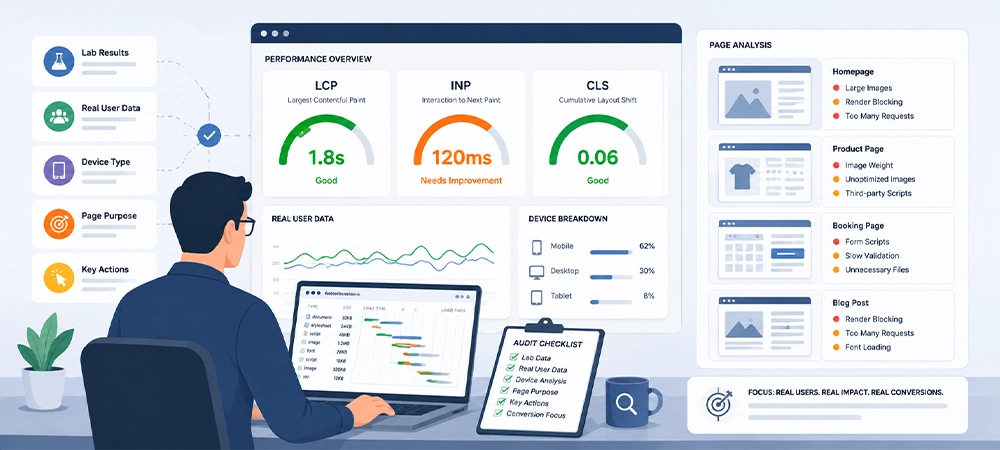
We start with measurement before changing anything. A useful speed audit looks at lab results, real user data, device type, page purpose, and the actions that matter most to the business.
We review key metrics such as Largest Contentful Paint (LCP), Interaction to Next Paint (INP), and Cumulative Layout Shift (CLS). These help show how quickly the main content appears, how responsive the page feels, and whether the layout stays stable while loading.
Then we look beyond the score. A homepage, product page, booking page, and blog post may each have different issues. One page may suffer from image weight. Another may be slowed by form scripts. A third may load too many files before the visible content appears.
Our goal is to find the fixes that affect real users and real conversions first.
The Fixes That Usually Move the Needle
Good speed work is practical. It reduces waste, protects design quality, and keeps the website easy to manage after the changes are made.
Some fixes are quick wins. Others need deeper development work. The right mix depends on the platform, hosting setup, site size, and conversion goals.
Key improvements often include:
- Compressing and resizing images without making them look poor
- Converting images to faster file formats where suitable
- Delaying low-priority scripts until after the page is usable
- Removing unused code, plug-ins, and old tracking tags
- Improving caching so repeat visitors load pages faster
- Reducing render-blocking files that slow the first view
- Cleaning up fonts so text appears quickly
- Reviewing hosting, server response, and content delivery options
We also protect what already works. A speed project should preserve tracking, forms, important design elements, and the brand experience while improving performance.
Why Mobile Speed Gets Extra Attention
Many visitors first meet a business through a phone. They may be walking, commuting, comparing options, or clicking from a social post. That means mobile speed carries a lot of pressure.
Mobile pages have less room for mistakes. Large hero images, heavy sliders, sticky bars, and slow scripts feel worse on smaller screens. A desktop page that seems acceptable can feel clumsy on mobile when buttons respond late, or content jumps around.
We review mobile journeys closely because they often connect directly to conversion actions. Calls, directions, booking forms, quote requests, and checkout pages need to feel immediate.
For local service businesses, this matters even more. A person searching for help may contact the company that loads first, explains the offer clearly, and makes the next step simple.
Related Article: Why Is Mobile-Friendly Web Design Important?
How Faster Pages Support SEO and Paid Ads
Website load speeds can support stronger search engine optimization (SEO) performance because they improve user experience. Search engines want to send people to pages that answer the query and work well on real devices.
Speed works alongside useful content, technical SEO, and authority. A faster page gives those efforts more room to perform. A page that loads quickly gives visitors more time to read, compare, and act.
Paid ads benefit too. If a campaign sends traffic to a slow landing page, part of the ad budget is wasted before the offer is seen. Faster landing pages help protect cost per lead by reducing drop-offs after the click.
This is why we connect web design, SEO, paid advertising, content, and marketing analytics instead of treating speed as an isolated task. The page has to attract the right visitor, load cleanly, and guide that person to the right action.
Speed Work Needs Clean Testing, Not Guesswork
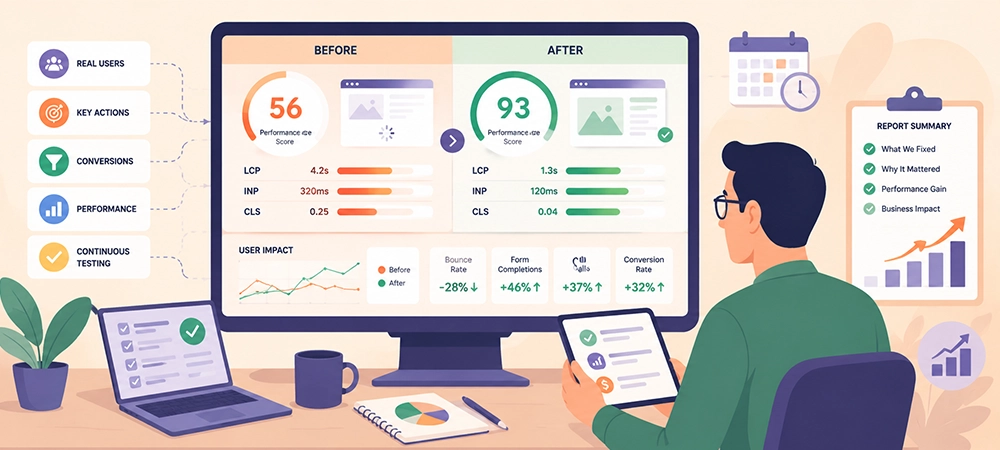
A speed project should have a clear before-and-after view. Without tracking, it is easy to celebrate a better score while missing the commercial result.
We compare priority pages before making changes, then review performance again after implementation. We also watch how users behave after the site becomes faster. Useful indicators may include bounce rate, form completions, calls, checkout movement, lead quality, and landing page conversion rate.
The work continues after the first round. Websites change often, especially when new campaigns, content, products, or tools are added. Regular checks help prevent speed problems from returning.
Clear reporting also matters. Business owners should understand what was fixed, why it mattered, and how the changes support growth. That keeps technical work connected to business decisions.
Related Article: How Can Web Design Impact Conversions?
Make Every Second Work Harder
A faster website gives every visitor a cleaner path from interest to action. It reduces waiting, builds trust, improves the mobile experience, and helps marketing traffic work harder.
For us, speed optimization is part of building websites that support business goals. We look at the technical causes, the user journey, and the conversion points that matter most.
A fast page with a confusing offer still loses people online, so we also pair technical fixes with clearer conversion paths.
If your website looks good but feels slow, the problem may already be costing inquiries, bookings, and sales each month. We can review your website load speeds, find the friction, and build a faster path to conversion.
Get in touch with our web design experts today.